ADVERTISEMENT
Hardening stance, China rejects Ladakh UT, raises 1959 claim line
Untenable, says India, Beijing not interested in clarifying LAC; China opposes border infra-construction by India
- Written By Shubhajit Roy | New Delhi |
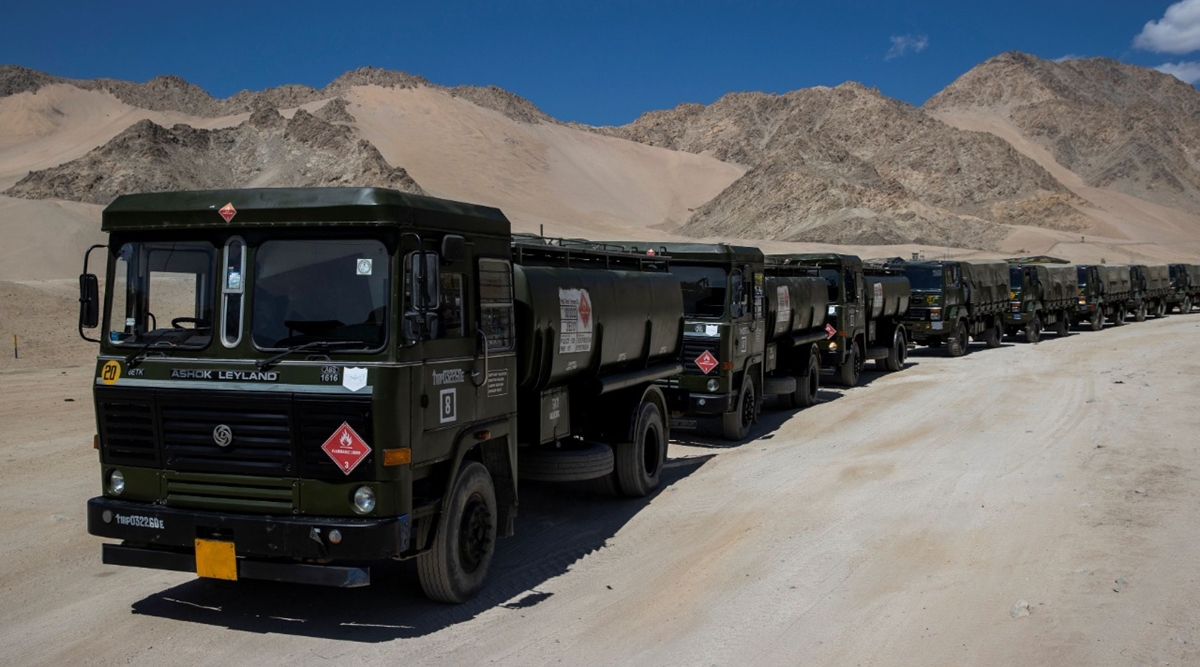
Pushing its old claim line in Ladakh and hardening its position on the situation there, Beijing Tuesday said it does not recognise the Union Territory of Ladakh and is opposed to the construction of Indian infrastructure there.
New Delhi reacted sharply, saying it has “never accepted the so-called unilaterally defined 1959 Line of Actual Control”, and that it is “untenable”.
This exchange between the two sides comes a week after their military commanders met at the Moldo border point facing Chushul following the Moscow agreement between the Foreign Ministers to dial down tensions along the LAC.
Read | Chinese investment pacts, pvt JVs invite Govt scrutiny
In Beijing, Chinese Foreign Ministry spokesperson Wang Wenbin, responding to a question on Indian road-building along the border, said China “does not recognize the so-called Union Territory of Ladakh” by India, and “opposes infrastructure construction in disputed border areas for military control purposes”.
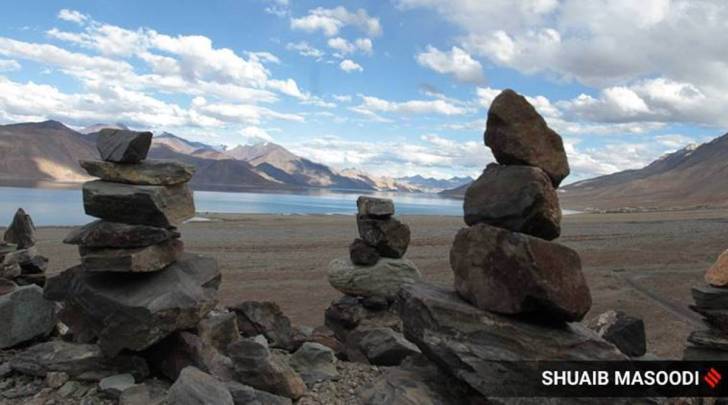
“According to the recent consensus reached between China and India, neither side should take any actions in border areas that would complicate the situation, so as not to affect the efforts of both sides to ease the situation,” Wang said, according to China state-run tabloid Global Times.
The spokesperson’s statement that Beijing “does not recognise the Union Territory of Ladakh” is an escalation in its rhetoric, as compared to its comment last year following the abrogation of Article 370 and the decision to bifurcate the state of Jammu and Kashmir into the Union Territories of J&K and Ladakh.
Opinion | As China-Pakistan ties become wider, India must prepare for implications
At that time, China had objected to the formation of Ladakh as Union Territory, saying this “undermined its territorial sovereignty”. Beijing had also expressed “serious concern” about the current situation in the region and had said “relevant sides need to exercise restraint and act prudently”.
But Beijing’s comments now are contrary to the spirit of the conversation between External Affairs Minister S Jaishankar and Chinese Foreign Minister Wang Yi on September 10. Meeting in Moscow, the two sides adopted a five-point approach to resolve the crisis and agreed that their troops “should continue their dialogue, quickly disengage, maintain proper distance and ease tensions”.
China’s hardening of position was also reflected in a statement to The Hindustan Times in Beijing, in which it said that it abides by the LAC as proposed by Premier Zhou Enlai to Prime Minister Jawaharlal Nehru in a letter dated November 7, 1959.
In the statement in Mandarin, the Chinese Foreign Ministry said, “Firstly, China-India border LAC is very clear, that is the LAC on November 7, 1959. China announced it in the 1950s, and the international community including India are also clear about it.”
In New Delhi, the Ministry of External Affairs responded to the Chinese Foreign Ministry statement on China’s position on the LAC.
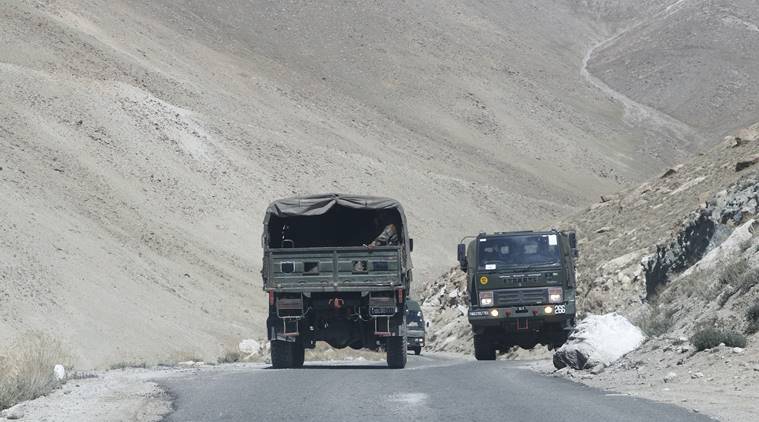
“India has never accepted the so-called unilaterally defined 1959 Line of Actual Control (LAC). This position has been consistent and well known, including to the Chinese side,” MEA spokesperson Anurag Srivastava said.
Furthermore, he said, under their various bilateral agreements including the 1993 Agreement on Maintenance of Peace and Tranquility along the LAC, 1996 Agreement on Confidence Building Measures (CBMs) in the military field, 2005 Protocol on Implementation of CBMs, 2005 Agreement on Political Parameters and Guiding Principles for settlement of the India-China Boundary Question, “both India and China have committed to clarification and confirmation of the LAC to reach a common understanding of the alignment of the LAC”.
“In fact, the two sides had engaged in an exercise to clarify and confirm the LAC up to 2003, but this process could not proceed further as the Chinese side did not show a willingness to pursue it,” Srivastava said, putting the onus on Beijing.
“Therefore, the insistence now of the Chinese side that there is only one LAC is contrary to the solemn commitments made by China in these agreements,” he said.
“As we have previously made clear, the Indian side has always respected and abided by the LAC. As the Defence Minister stated in Parliament recently, it is the Chinese side which, by its attempts to transgress the LAC in various parts of the Western Sector, has tried to unilaterally alter the status quo.”
In the last few months, the Chinese side, he said, has repeatedly affirmed that the current situation in the border areas should be resolved in accordance with the agreements signed between the two countries.
Referring to the September 10 meeting in Moscow between the Foreign Ministers, Srivastava said the Chinese side reiterated its commitment to abide by all the existing agreements.
Read | IAF fully resolved to counter any ‘misadventure’ in eastern Ladakh: Air Chief Marshal RKS Bhadauria
“We therefore expect that the Chinese side will sincerely and faithfully abide by all agreements and understandings in their entirety and refrain from advancing an untenable unilateral interpretation of the LAC,” he said.
The Indian response, sharp in tone and tenor, after the sixth round of Corps Commander-level talks, which was also attended by a senior Indian diplomat, signals that the two sides have hardened their positions diplomatically as well.
At the talks, the two sides had agreed not to engage in “escalatory behaviour” along the LAC. While there was no agreement on “disengagement” at the friction points, the two sides came to an understanding on not escalating the situation given that troops of the two armies continue to be within firing range of each other.
“They agreed to earnestly implement the important consensus reached by the leaders of the two countries, strengthen communication on the ground, avoid misunderstandings and misjudgments, stop sending more troops to the frontline, refrain from unilaterally changing the situation on the ground, and avoid taking any actions that may complicate the situation,” a joint press release stated after the meeting.
Sources said that if “non-escalatory behaviour” holds for a reasonable period of time, it will give confidence to take the next step. And to take the process forward, sources said, another round of talks could then take place between the commanders and the diplomats.
But Beijing’s latest remarks reflect a hardening of stance. Hopes of an early resolution of the Ladakh crisis are fast receding, and it appears that the two armies will have to keep their troops deployed in the region through the winter months.
📣 The Indian Express is now on Telegram. Click here to join our channel (@indianexpress) and stay updated with the latest headlines
For all the latest India News, download Indian Express App.


.jpg)


'%20x='0'%20y='0'%20height='100%25'%20width='100%25'%20xlink%3Ahref='data%3Aimage/jpeg;base64,/9j/4AAQSkZJRgABAQAAAQABAAD/2wBDABALDA4MChAODQ4SERATGCgaGBYWGDEjJR0oOjM9PDkzODdASFxOQERXRTc4UG1RV19iZ2hnPk1xeXBkeFxlZ2P/2wBDARESEhgVGC8aGi9jQjhCY2NjY2NjY2NjY2NjY2NjY2NjY2NjY2NjY2NjY2NjY2NjY2NjY2NjY2NjY2NjY2NjY2P/wAARCAAGAAgDASIAAhEBAxEB/8QAFQABAQAAAAAAAAAAAAAAAAAAAAL/xAAcEAACAgIDAAAAAAAAAAAAAAAAAgQRAQMhMdH/xAAVAQEBAAAAAAAAAAAAAAAAAAACA//EABYRAQEBAAAAAAAAAAAAAAAAAAABMf/aAAwDAQACEQMRAD8AjRG1z4iu9q6vi6z3xfgAJ07r/9k='%3E%3C/image%3E%3C/svg%3E)
